
Search no longer ends with a list of blue links. With ongoing shifts in search engine optimization, Google shows AI Overviews and AI Mode above or alongside traditional results, and ChatGPT can search the web and attach source links to its answers. For site owners, that raises a practical question: how do you become one of the sources these systems cite?
The discipline that has grown around this question is called answer engine optimization (AEO). Related terms such as generative engine optimization (GEO) are used for the same idea. This guide explains what AEO actually involves, what Google and OpenAI have said publicly about how their systems use websites, and which steps are worth your time.
What Is Answer Engine Optimization?
Answer engine optimization is the practice of making your content easy for AI-powered search tools to find, understand, and reference. Where classic SEO aims to rank a page in a list of results, AEO aims to have your information used, quoted, or linked inside a generated answer.
AEO and GEO are industry labels, not official Google terms, and they promise more certainty than anyone can deliver. No technique guarantees a citation, because AI systems choose sources dynamically, and the answers can vary between searches and users. The realistic goal is to be a strong candidate whenever your topic comes up.
Is AEO Different From SEO?
Mostly, no, and this is the most important point in the whole topic. Google's documentation on AI features states that the best practices for SEO remain relevant for AI Overviews and AI Mode, and that there are no additional requirements or special optimizations needed to appear in them. Google's later guidance for generative AI features makes a similar point and says structured data is not required, with no special markup needed for AI features.
OpenAI's description of ChatGPT search points the same way. Visibility depends on being crawlable, on being a relevant source, and on content that answers the question.
So treat AEO as an extension of good SEO with extra attention to clarity and structure, not as a separate secret playbook. Combining AI readability with core Next.js SEO best practices ensures crawlers can parse and index your architecture accurately. Be skeptical of anyone selling guaranteed AI citations.
How Google Chooses Pages for AI Overviews
Google describes AI Overviews and AI Mode as features that surface relevant links drawn from its core Search systems. The technical requirements are simple. To appear as a supporting link, a page must be indexed and eligible to be shown in Search with a snippet. Google also recommends:
- Allowing crawling in robots.txt and in any CDN or hosting layer
- Making content easy to find through internal links
- Providing a good page experience
- Keeping important content available as text
Google also notes that AI features may explore a topic by breaking a question into related sub-searches, which means a page that covers a subject thoroughly has more chances to be useful. Site owners can limit how their content appears using standard preview controls such as nosnippet, and those controls affect AI features too.
Traffic from AI features is included in your overall Search Console performance data, so there is no separate report to watch.
How ChatGPT Finds and Cites Sources
OpenAI publishes the crawlers it uses, and each one has a different job. OpenAI's crawler documentation explains the three that matter:
- OAI-SearchBot: Surfaces websites in ChatGPT's search features. Sites that opt out of it will not be shown in ChatGPT search answers, although they may still appear as navigational links.
- GPTBot: Used for training OpenAI's generative AI models. Blocking it is independent of search visibility.
- ChatGPT-User: Visits pages when a user's request triggers it. Because a person initiates it, robots.txt rules may not apply.
For site owners, the practical consequence is that blocking all "AI bots" with a broad rule can remove you from ChatGPT's search answers. If you want to appear in answers but stay out of model training, you can allow OAI-SearchBot and disallow GPTBot. OpenAI notes that robots.txt changes can take around 24 hours to take effect.
Practical Steps for Answer Engine Optimization
Executing answer engine optimization effectively comes down to solid technical hygiene and structured clarity:
1. Make Sure Machines Can Reach Your Content
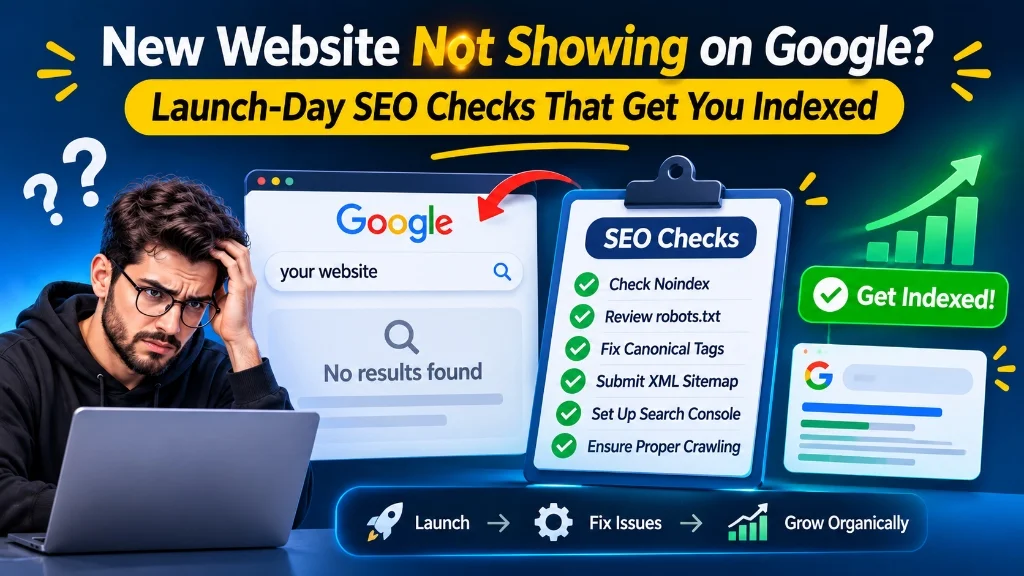
Check that your robots.txt, firewall, and CDN are not blocking Googlebot or OAI-SearchBot by accident. Make sure key pages are indexable, carry no stray noindex tags, and appear in your XML sitemap. A technical audit often finds that important pages are blocked by something that nobody remembers adding. Ongoing technical SEO audits cover this kind of crawl and indexation check.
2. Put the Answer First
AI systems pull passages that directly answer a question. Open each section with a clear, self-contained answer in the first sentence or two, then expand with detail and examples. Use question-style headings where they match how people actually search, such as "How much does X cost?" or "What is the difference between X and Y?"
Keep paragraphs short and avoid burying the point behind long introductions. Content that is easy for a person to skim is also easier for a system to extract.
3. Be Clear About Who You Are
AI tools try to understand entities: businesses, people, products, and places. Make yours unambiguous:
- Use a consistent business name, description, and contact details across your site and profiles
- Publish a detailed About page and named author pages with real credentials
- Describe your services in plain, specific language
- Keep your Google Business Profile and other listings accurate where relevant
Vague copy such as "innovative solutions for modern businesses" gives a system nothing concrete to repeat.
4. Publish Original, Verifiable Information
Generic summaries add little, because an AI tool can already produce them. What earns citations is information that is specific and checkable: original data, real case studies, documented processes, pricing logic, screenshots, and first-hand experience. Cite your own sources when you make factual claims, and keep statistics up to date.
5. Use Structured Data Realistically
Structured data helps search engines interpret a page, and it remains worth adding for types that match your content, such as Article, Organization, and Product. Keep expectations honest, though. Google says it is not required for generative AI features, and there is no markup that guarantees inclusion. Markup must also match what is visible on the page.
FAQ markup deserves a particular warning. Google restricted FAQ rich results in 2023 to a limited set of sites, so most businesses should not expect a visual benefit from it. A well-written FAQ section is still useful to readers and gives clear question-and-answer passages, with or without the markup.
6. Serve Content in a Crawlable, Fast Way
If your important text only appears after heavy client-side JavaScript runs, some crawlers may not see it. Server-rendered or statically generated pages deliver complete HTML, which is one reason a performance-minded custom Next.js website suits this kind of work. Fast pages and a clean structure also support the page-experience factors Google recommends.
7. Keep Content Fresh and Accurate
Outdated pages weaken trust. Review your most important pages on a schedule, update prices, dates, and processes, and remove content that is no longer true. Regular website maintenance also protects the technical basics, such as working redirects, valid markup, and fast load times, that AI features depend on.
8. Earn Mentions Beyond Your Own Site
AI tools do not rely on a single source. Being mentioned in reputable publications, industry directories, and communities helps establish that your business is real and relevant. Focus on genuine visibility, such as contributing expert commentary and publishing useful resources, and not on low-quality link schemes.
Mistakes to Avoid
- Blocking every AI crawler without understanding which ones affect search visibility
- Chasing a "magic" format such as special files or hidden prompts that no search engine has said it needs
- Mass-producing thin AI-written pages, which add no original value
- Stuffing pages with FAQs unrelated to the topic
- Making unverifiable claims, which damage trust with readers and systems alike
- Ignoring traditional SEO while focusing only on AI
Earning AI citations brings traffic, but turning that visibility into revenue requires a clear conversion path. If your site ranks or gets cited yet remains a website not generating leads, addressing friction in your forms, messaging, and CTAs is just as critical as discovery.
How to Measure Progress
AI visibility is harder to measure than rankings, but you can still track signals:
- Monitor impressions and clicks in Search Console for your target topics.
- Check server logs for visits from crawlers such as Googlebot and OAI-SearchBot.
- Look at referral traffic from AI tools in your analytics, where the source is reported.
- Run your key questions through AI search tools periodically and note whether your site is cited, remembering that answers vary.
Treat these as directional signals, not precise measurements.
Conclusion
Answer engine optimization comes down to being a source that machines can reach, understand, and trust. Keep your site crawlable and fast, answer questions clearly, make your business identity unambiguous, publish original and verifiable information, and keep it up to date. Both Google and OpenAI describe mechanisms that reward these basics, and neither offers a shortcut.
Want to Optimize Your Site for AI Search & Overviews?
Get a complete AEO and technical SEO audit to identify crawl blocks, entity clarity, schema gaps, and content structure improvements.
Book an AEO and technical SEO audit