
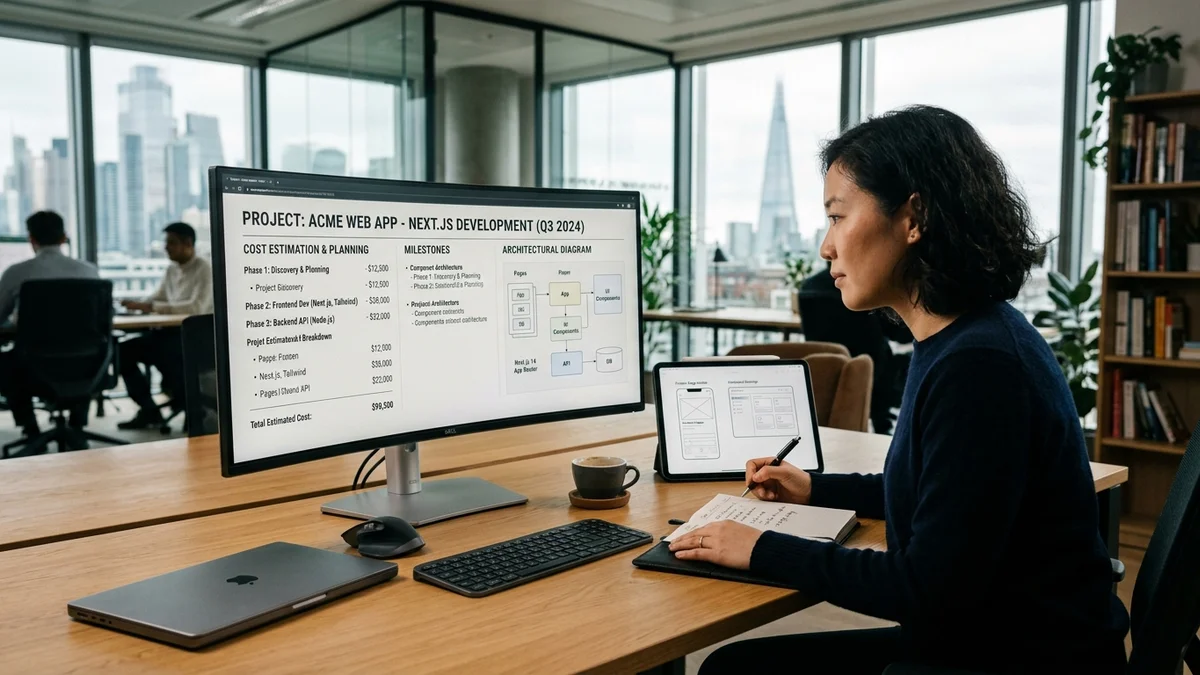
How Much Does a Next.js Website Cost?
A custom Next.js website in 2026 costs between $4,500 and $25,000 depending on scope and complexity. Simple marketing websites sit in the $4,500 to $8,500 range. Full-stack web apps, headless e-commerce portals, and enterprise platforms range from $14,000 to $55,000+.
That spread exists because scope drives hours, and hours drive cost. A 6-page brochure site and a multi-tenant SaaS product are both built on Next.js, but they share almost nothing in terms of engineering work.
What makes Next.js worth the investment over cheaper template alternatives is what you get for the money: sub-second page loads, green Core Web Vitals, and custom website design that you own outright with no monthly plugin fees or vendor lock-in.
Next.js Cost by Project Type
The table below covers realistic price ranges for the five most common project categories. Timelines assume a defined scope going into the build.
| Project Type | Cost Range | Timeline | What is Included |
|---|---|---|---|
| Corporate Marketing Site | $4,500 - $8,500 | 3 - 5 weeks | 6 to 10 pages, App Router, mobile-first design, SEO |
| Headless CMS Platform | $8,500 - $15,000 | 6 - 8 weeks | Sanity or Strapi CMS, dynamic blog, case studies |
| Full-Stack Web Application | $14,000 - $28,000+ | 8 - 14 weeks | Auth, PostgreSQL, user portals, Stripe billing |
| Headless E-Commerce Store | $10,000 - $24,000 | 7 - 12 weeks | Shopify API, fast checkout, Apple Pay, Google Pay |
| Enterprise Migration | $22,000 - $55,000+ | 12 - 20 weeks | WordPress/Drupal migration, 301 redirects, API rebuilds |
Technical Note
Always confirm your agency builds with the modern Next.js App Router and Server Components, not the legacy Pages Router. Server Components reduce client-side JavaScript by up to 80%, which directly improves mobile Core Web Vitals scores.
What Drives the Price Up
Five factors account for most of the cost variation between projects. Understanding these helps you scope accurately before getting quotes.
UI/UX Design Depth
A bespoke Figma design with custom animations and a full component system takes more hours than adapting a standard layout. The design phase typically consumes 20 to 40 percent of total project time, but it determines everything that follows.
Rendering Strategy
Static Site Generation is fast and cheap to host. Server-Side Rendering and Incremental Static Regeneration add engineering complexity when content changes frequently or pages are user-specific. Each choice affects build time and ongoing hosting costs.
CMS and Content Architecture
Configuring a headless CMS like Sanity or Contentful with structured schema, preview modes, and editorial workflows adds time upfront. It pays back quickly once your team can publish content without touching code.
API Integrations
Every third-party connection, whether a CRM, payment gateway, booking system, or analytics tool, adds scoped engineering work. Each has its own auth model, rate limits, and failure modes that need defensive handling.
Technical SEO Engineering
Metadata APIs, XML sitemaps, JSON-LD structured data, and canonical tags all take dedicated time to implement correctly. Technical SEO built into the architecture from the start costs less than retrofitting it after launch.
Agency vs. Freelancer vs. In-House
Your hiring model affects both price and risk in different ways.
Solo Freelancer
Rates typically run $40 to $100/hr. The main risk is single-point-of-failure: one person handles design, frontend, backend, and deployment. Best suited to small, well-defined tasks rather than complete builds.
Specialist Agency
Agencies charge $75 to $175/hr or offer fixed-scope project pricing. You get a team covering design, engineering, QA, and ongoing support. Fixed-price contracts remove billing uncertainty entirely.
Full-Time In-House Engineer
A senior Next.js engineer in the US or UK costs $110,000 to $160,000 in base salary before benefits and equipment. For most companies under $5M ARR, a focused agency engagement delivers more value per dollar spent.
Ongoing Costs After Launch
The build is a one-time cost. These are the recurring expenses to budget for each year.
- Cloud Edge Hosting: Vercel or AWS Amplify runs $20 to $100/mo for standard traffic volumes.
- Headless CMS: Sanity and Strapi both have free tiers. Business plans start around $99/mo for larger editorial teams.
- Domain and SSL: Domain registration costs $15 to $30/yr. SSL is included free on all modern cloud platforms.
- Maintenance Retainer: A monthly maintenance plan ($200 to $600/mo) covers security patches, daily backups, speed monitoring, and bug fixes.
Next.js hosting costs stay low because static and edge-rendered pages do not need always-on servers. Most marketing sites run for under $20/mo on Vercel, even under significant traffic.
Getting the Most From Your Investment
A well-built Next.js site is a revenue asset. These decisions directly affect the return you get from the spend.
Prioritize Conversion Pages First
Service pages, landing pages, and contact flows generate leads. Spend your budget making those fast and persuasive before adding blog infrastructure or secondary features.
Lock Scope Before Development Starts
Scope changes mid-build are the most expensive thing in any web project. Agree on a precise feature list, get it in writing, and stick to it for the initial launch. Improvements come in the next cycle.
Use Speed as a Paid Ad Multiplier
Landing pages that load in under one second get higher Quality Scores on Google Ads, which lowers cost-per-click. The speed investment pays back directly in reduced ad spend per conversion.
If you are evaluating which framework to build on before committing to a budget, the technical trade-offs between Next.js and plain React matter more for long-term costs than the initial build price.
Teams reducing costs by hiring remotely need to vet carefully. The wrong agency choice at the $5k mark can cost $20k to fix. How you hire a remote web development agency matters as much as who you hire.
Get an Itemized Next.js Quote
We scope every project before pricing it. You get a fixed-scope proposal with milestones, delivery dates, and 100% code ownership before any work begins.
Request a free project estimate